Step in
Foundations / Footwork / Shadow
One step forward with the lead foot first, and the base intact when you arrive.
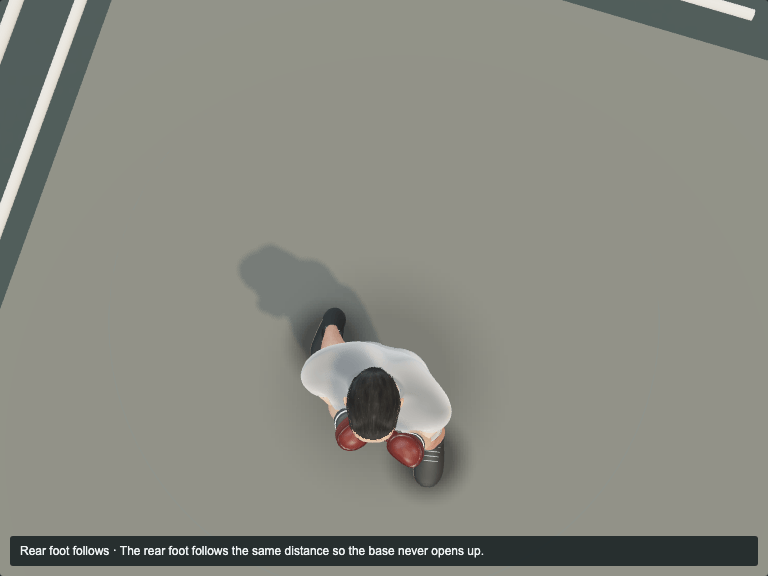
Arrive in your stance
- Check the stagger in the Above camera before you move.
- Lead foot first, landing short and light.
- Rear foot follows the same distance so the width comes back.
Foundations / Foundation / Shadow
Why it matters
Range is decided by the feet. A step in that keeps the stance puts you in range with a punch available; a step that opens the base puts you in range with nothing.
Walk through it
- StanceThe width and the stagger you are about to keep
- Lead foot firstLands short, heel light, knee still soft
- Rear foot followsThe same distance, on the ball of the foot
- Same stance, closerHands still up, ready to punch from here
Common faults
- Lead foot reachesA long first step straightens the lead knee and leaves the rear foot behind
- Rear foot dragsBoth feet move the same distance; a dragged rear foot opens the stance
- Hands drop on the stepThe gloves travel with the base and stay on the jaw
Drill
3 rounds of 1 min 30 s, 30 s rest. 10 to 12 steps a round, walking back to the start between each, checking the stance on arrival
Solo study: no partner, no contact, not verified by a coach. Rehearse a movement your coach has already shown you.
The movements inside it
- Boxing guard: Set the feet, Hands home, Check balance, Ready. Watch for: Avoid bringing the feet onto one tightrope.
- Step in: Stance, Lead foot first, Rear foot follows, Same stance, closer. Watch for: The rear foot drags or the lead foot reaches. Both feet move the same distance.
Where it sits
Foundations: The stance, the jab and the feet. Everything else in the room returns to these six.
Other studies in this tier: Stance and breathing, Jab / return to guard, Jab / step back, Step out, Rhythm bounce.
Sessions that use it: Feet first.
Rehearse, then reflect
Open the visual study to see the movement from four cameras. Start slowly using the movement taught by your coach, pause between repetitions and keep the range comfortable. Add the study to a session when you want a timed block, and record one useful observation afterward.
Open the visual study ↗How to use the studio · Glossary · What this app is not · Method and limits